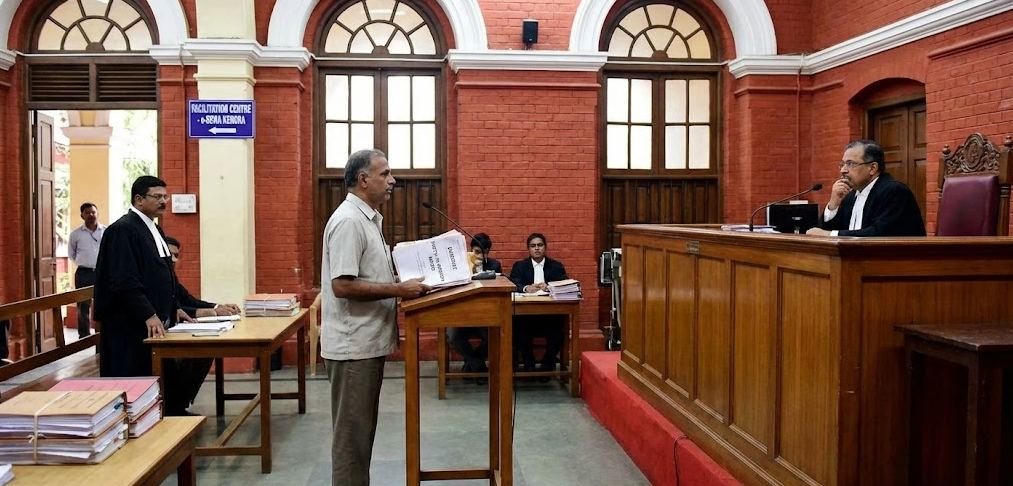
Did you know you have the legal right to represent yourself in court? You don’t always need to hire a lawyer. This right is given under Section 32 of the Advocates Act, 1961 and Order III Rule 1 of the Civil Procedure Code (CPC). If you’re confident and prepared, here is how you can do it step by step.
1. Prepare Your Case Properly
Start by drafting your plaint or written statement in the correct legal format. Clearly write down all the facts, what relief you are asking for, and list your evidence. A clean, organized document makes a strong first impression.
2. File a Vakalatnama as Party-in-Person
Instead of appointing a lawyer, you need to file a simple application or memo stating that you want to appear in person. Many High Courts have a “Party-in-Person” cell specifically to help people like you with the process.
3. Submit Documents & Pay Court Fees
Attach all your evidence to the plaint and submit it at the filing counter. You will have to pay the required court fees at this stage, so keep the receipts safely.
4. Court Verification
The judge may call you for a quick interview. Don’t be nervous. They just want to confirm that you understand the process and are capable of arguing your own case.
5. Attend Hearings and Argue
Now comes the real work. You will need to examine your witnesses, cross-examine the other side, and present your arguments to the judge personally. Be confident and stick to the facts.
Guides and Facilities
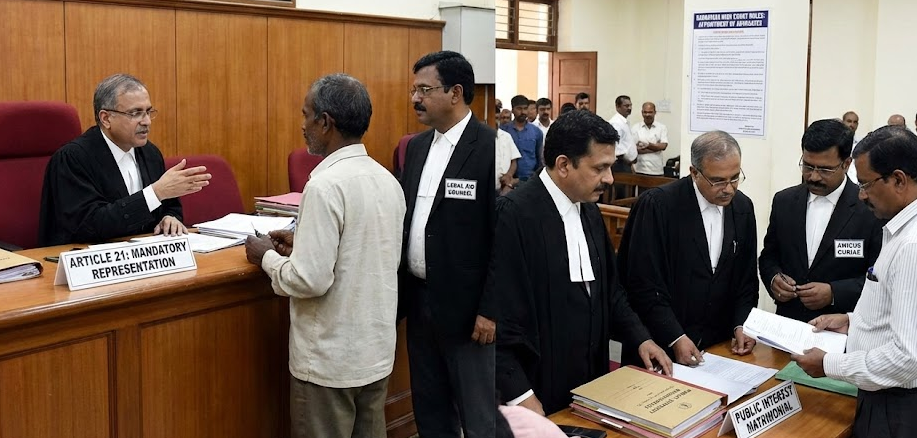
1. Where to Find Them (Physical Locations)
You can find these facilitation centers at the following High Court of Karnataka seats:
- Principal Bench (Bengaluru):
- Facilitation/Filing Counters: Located on the Northern Wing (Ground Floor), facing the Vidhana Soudha.
- e-Sewa Kendra: Situated near the public entry gates (Gate No. 5 is often used for litigant entry) to ensure they are the first point of contact.
2. Services Provided for “Party-in-Person”
If you are appearing in person, these centers can help you with:
- Case Information: Checking the status of your case, the next hearing date, and daily orders.
- e-Filing Assistance: Helping you scan and upload documents if you are filing your case electronically.
- Certified Copies: Assisting in the application for official copies of judgments or orders.
- Aadhaar e-Sign: Helping you authenticate documents if you do not have a digital signature.
- Free Legal Aid: Guiding you to the Karnataka State Legal Services Authority (KSLSA) if you qualify for a free lawyer.
3. Key Rules for Appearing in Person
In Karnataka, appearing without a lawyer is governed by the High Court of Karnataka (Conduct of Proceedings by Party-In-Person) Rules, 2018.
- Competency Certificate: Before you can argue your case, you must typically appear before a committee that assesses if you are capable of handling the legal proceedings.
- Digital Access: The court highly encourages the use of the HCKChatBot (on Telegram) and the official website for real-time updates to avoid unnecessary physical visits.
Note: For physical filing or entry, it is often required to book an appointment or check the latest Standard Operating Procedure (SOP) on the High Court website, as entry protocols can change.
Additional Legal Aid
While the term “mandatory” isn’t usually in the statute, the Supreme Court of India and the Karnataka High Court have ruled that a court cannot decide a criminal case against an accused person if they are unrepresented.
- Criminal Appeals: If your lawyer doesn’t show up or you cannot afford one, the court must appoint an amicus curiae or a legal aid counsel to argue your case. If they don’t, any judgment passed against you can be set aside by a higher court for violating your fundamental rights (Article 21).
- Serious Crimes: In cases involving life imprisonment or the death penalty, the Karnataka High Court Rules (amended in 1999) and various precedents require the court to appoint an experienced advocate to assist.
2. When is it Discretionary?
In other scenarios, the court appoints an amicus curiae only “if they feel you need assistance” or if the case involves a complex point of law:
- Public Interest: If a case affects the general public, the judge might appoint an amicus to provide a neutral, expert opinion.
- Matrimonial/Civil Cases: If the parties are struggling to present their case or if there is a specific legal knot to untie, the judge may appoint one at their discretion.
- Self-Representation: If you are arguing your own case (Party-in-Person) and the court feels the legal issues are too complex for a non-lawyer, they will often suggest or appoint an amicus to ensure the law is applied correctly.
3. Key Rules in Karnataka
- High Court of Karnataka Rules: These allow the court to appoint an advocate from a pre-approved panel if the accused has “no sufficient means” or if the “interest of justice so requires.”
- Legal Aid vs. Amicus: While they both help you, a “Legal Aid” lawyer is specifically assigned to represent your interests because of financial need. An “Amicus Curiae” is technically there to assist the Court in reaching the right decision, though in practice, they often defend the unrepresented party.
Questions That a Person should be Ready to answer
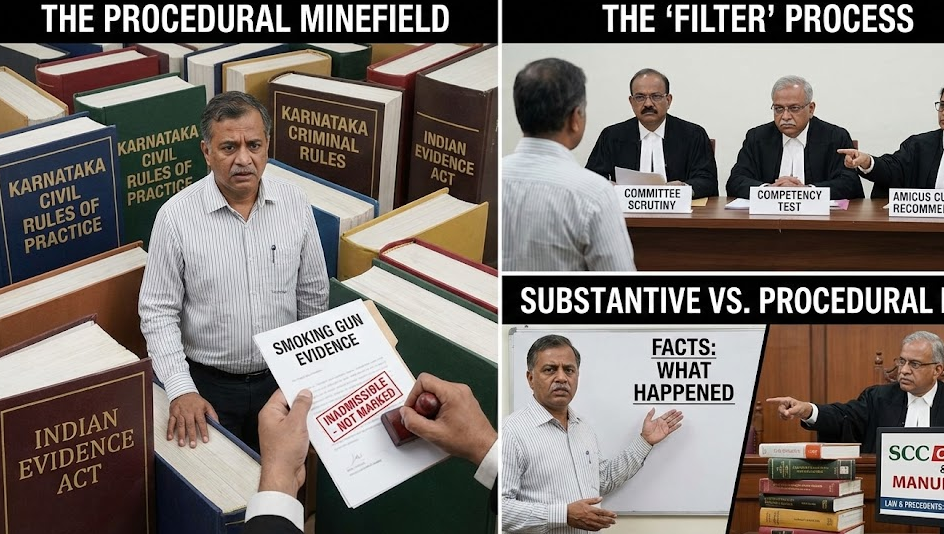
1. The Procedural “Minefield”
Courts in Karnataka operate under the Karnataka Civil Rules of Practice and the Karnataka Criminal Rules of Practice. These rules govern everything from the size of the paper you use to the specific way an index is formatted.
- Admissibility of Evidence: You may have a “smoking gun” document, but if you don’t know how to “mark” it as an exhibit according to the Indian Evidence Act, the judge may be legally unable to look at it.
- Cross-Examination: Complex cases often require “destroying” the credibility of a witness. Ask questions that are legally permissible (not “leading”) .
2. The “Filter” Process in Karnataka
If you want to argue your case in the High Court of Karnataka, there is an additional requirement.
- The Committee Scrutiny: Unlike lower courts where you can simply stand up, the High Court often requires a Party-in-Person to appear before a committee of officers (often judicial officers on deputation).
- The Competency Test: This committee interacts with you to see if you can “assist the court.” If they feel the legal questions are too complex for a layperson to handle without wasting judicial time, they may recommend that the court appoint an Amicus Curiae (a “friend of the court” lawyer) to help you, or even direct you to get a lawyer.
3. Substantive vs. Procedural Law
A common mistake for those fighting their own case is focusing entirely on facts (what happened) while the judge is focused on law (the legal framework).
- Complex Questions: If your case involves interpreting a specific section of the Constitution, or a conflict between two different High Court judgments, the judge expects arguments based on “precedents” (previous case law).
- Research Gap: Lawyers have access to paid databases (like SCC Online or Manupatra). Finding the “latest” ruling from the Supreme Court that overrides a 10-year-old Karnataka High Court ruling is a massive challenge for a self-represented litigant.